Email Marketing
Even more so than social media or your website, email marketing is a direct way to speak to your audience, especially since it’s more than likely that they’ve already purchased from you or visited your website. Receiving an email address means that your consumer wants to hear from you more frequently, whether it’s an update, promotion, product launch, or all of the above! The best part about email marketing is that you can track exactly what people want to hear based on their open rate and clicking activity. This enables you to build better, stronger relationships that will keep them coming back for more.
I restarted email marketing at the Landmark Resort with a prior, inactive subscriber base that was unfamiliar with the new changes and updates occurring at the resort. Once I implemented automations for lead generation campaigns targeting the leisure, weddings, and group business segments, I purged subscribers that had been inactive for longer than six months that did not interact with my re-engagement campaign. This increased CTOR (click-to-open rate) from a monthly average of 4-5% to over 90%!

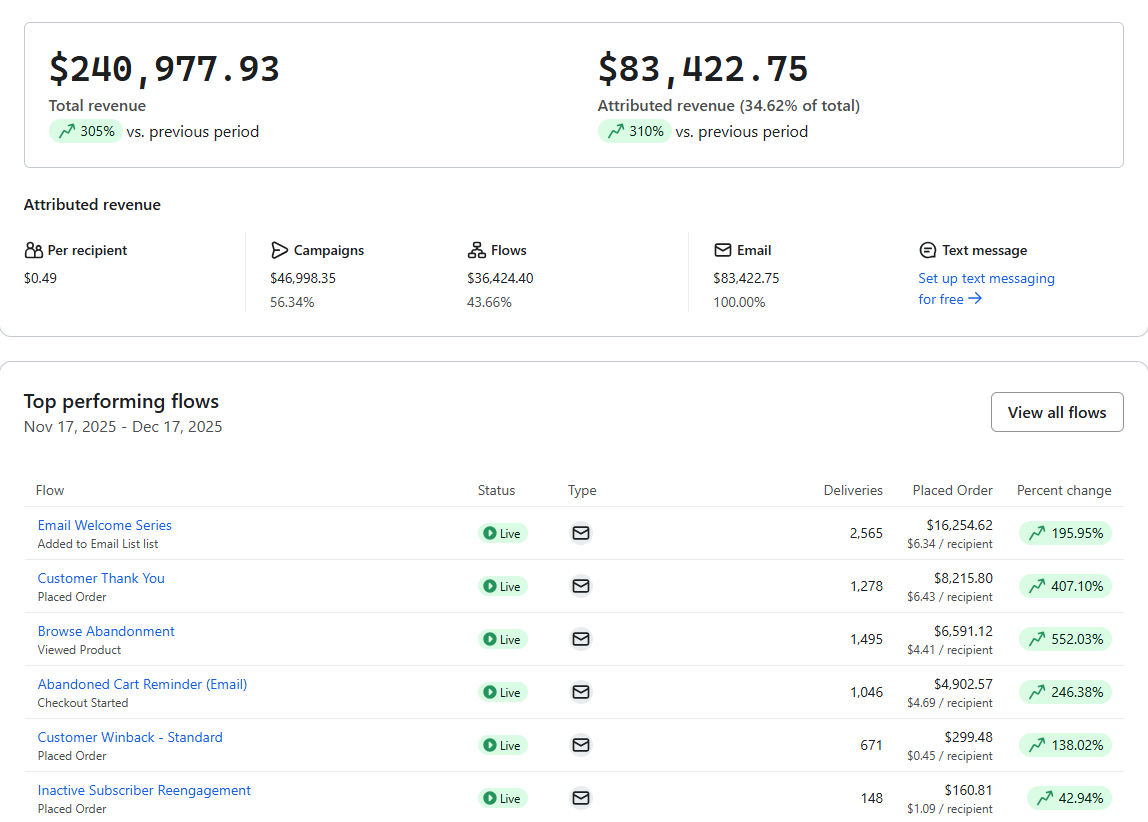
Similarly, at Renard’s Cheese, I reactivated a previously dormant subscriber base. I created email flows for the following: welcoming new customers, thanking customers after they placed an order, a browser abandonment reminder, an abandoned cart reminder, and a customer winback campaign. Each of these flows touches on the customer purchasing journey and maintains a relationship with the consumer post-purchase to nurture lifetime value.
Previously, email newsletters had been sent only once per quarter, which led to that inactive subscriber base. I increased the cadence of email newsletters to weekly with new updates, promotions, and behind-the-scenes content. This led to revenue increasing and email marketing attributing to the overall revenue per quarter—typically, 0.22% of subscribers would place an order with $0.29 revenue per recipient of over 16,000 subscribers.